Fundamentals

1/5
×

Laser Cutting

Laser cutting process
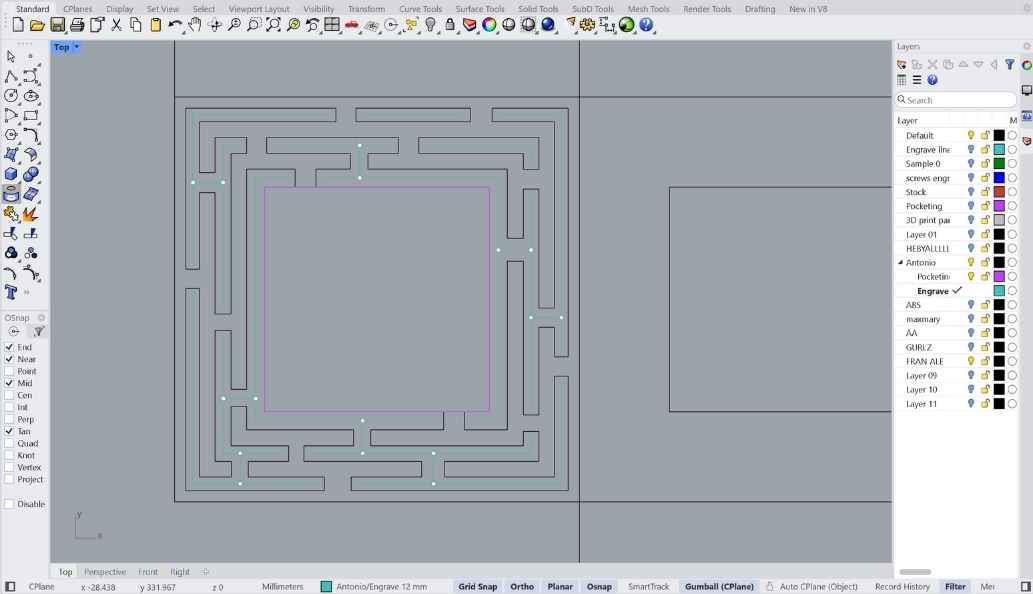
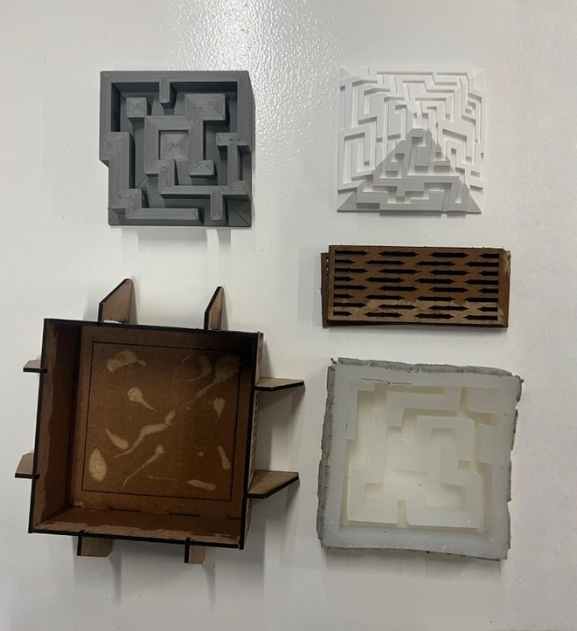
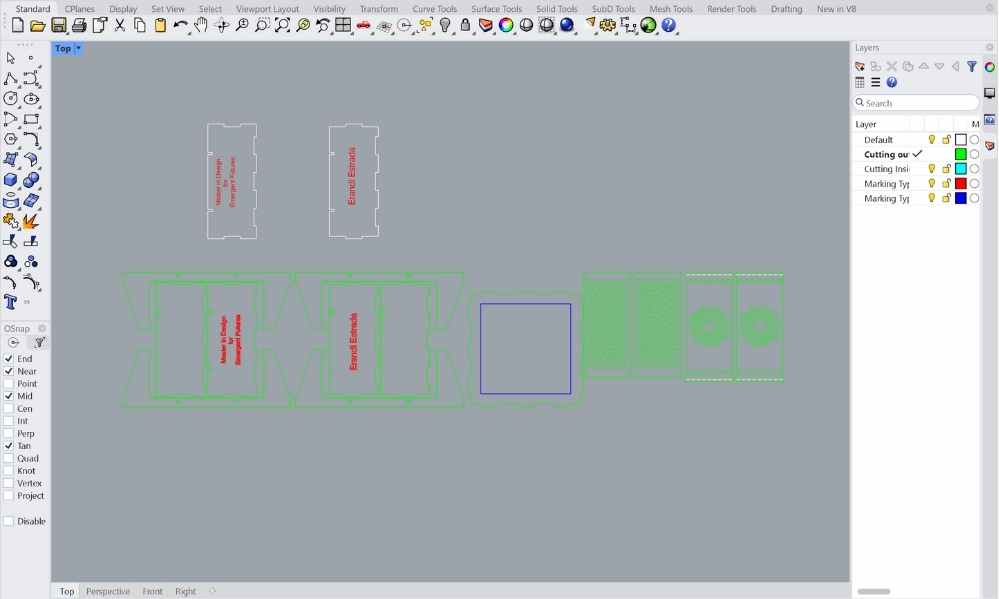
MDF box for silicone mold containment

During this session, we used MDF to laser-cut the box that would later hold our silicone mold.

Key Insight: Our main issue appeared when we realized the box did not have zero tolerance, which allowed gaps where the silicone could escape. This pushed us to improvise a temporary solution using tape to seal the edges.

In the end, the experience reinforced how small inaccuracies at this stage can affect all the following steps.

Laser Cutter MDF Rhino Tolerance Testing
🔶

3D Printing

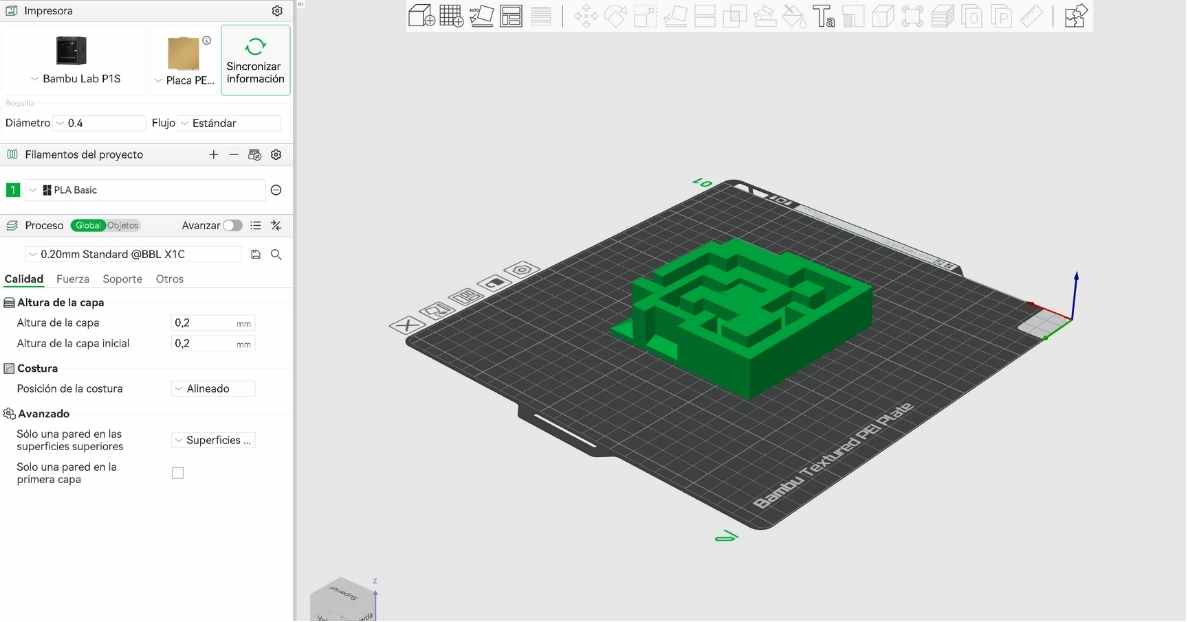
3D printed maze
Concentric layer pattern on maze surface

For the 3D printing session, we decided to create a small maze as the positive piece for our mold. Choosing concentric top layers resulted in a surface with very visible lines, making the finish look rougher than expected.

Material Expression: This became an interesting lesson on how printing settings directly shape the material expression of an object.

It became clear how each setting directly shapes the material expression of the piece, and how easily a single parameter can shift the result.

Bambu Printer PLA Slicing Software
⚙️

CNC Milling

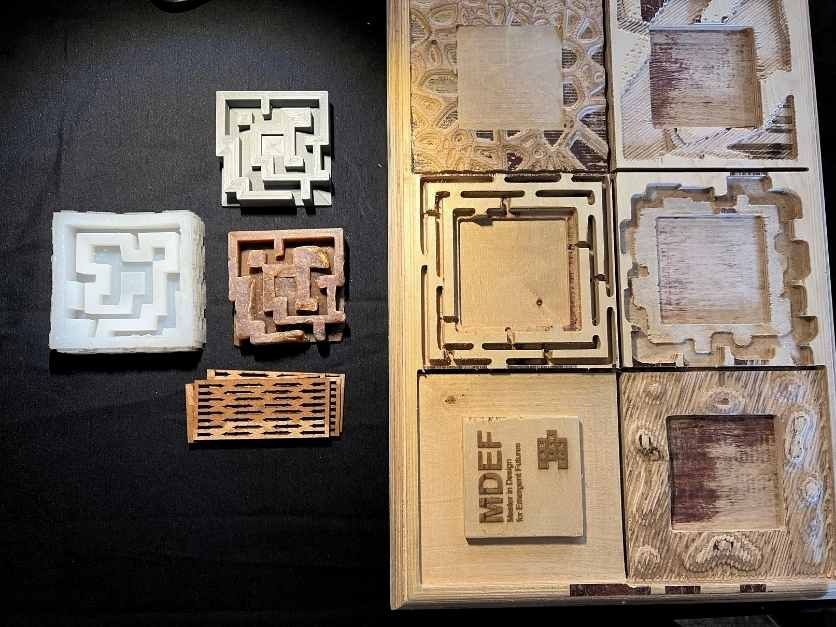
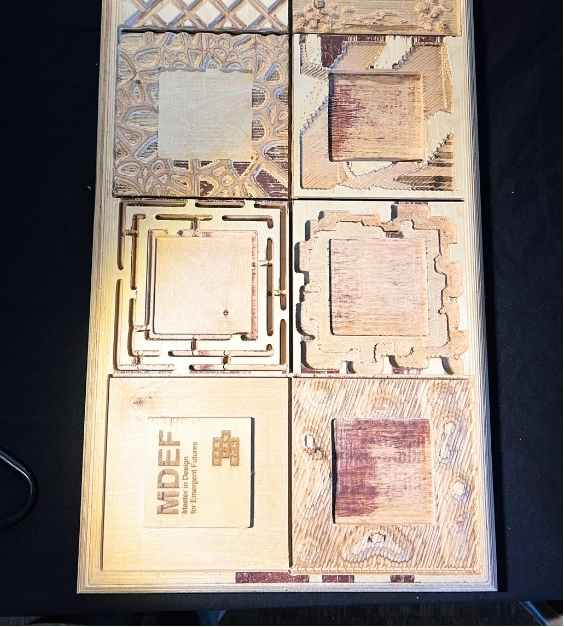
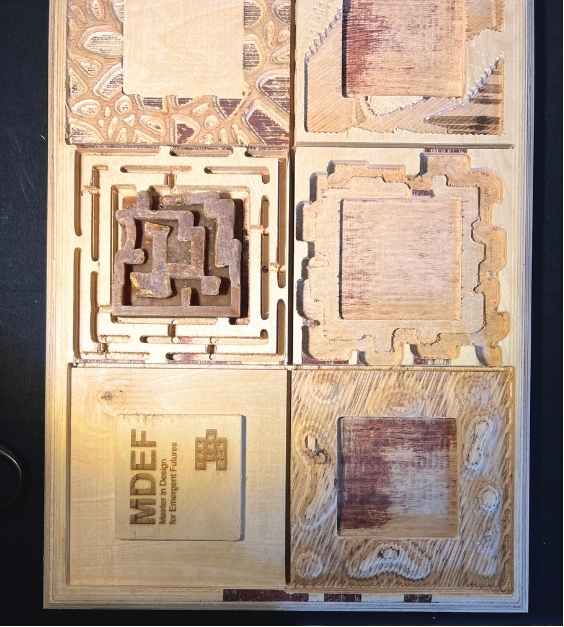
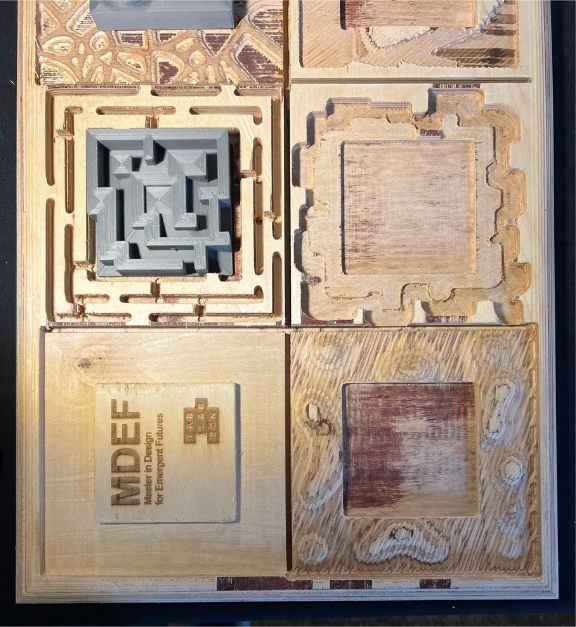
CNC milling frame
Precision-cut frame for cast piece

With the CNC, we produced the frame where the final cast piece would be placed. This session highlighted the importance of understanding tolerances, tool types, and machining strategies.

Strategic Planning: Our main challenge was deciding which tools and operations were appropriate for the design, especially given how many options CNC workflows offer.

It reminded me that subtractive manufacturing demands both technical knowledge and careful planning.

CNC Router Plywood CAM Software
🧪

Molding & Casting

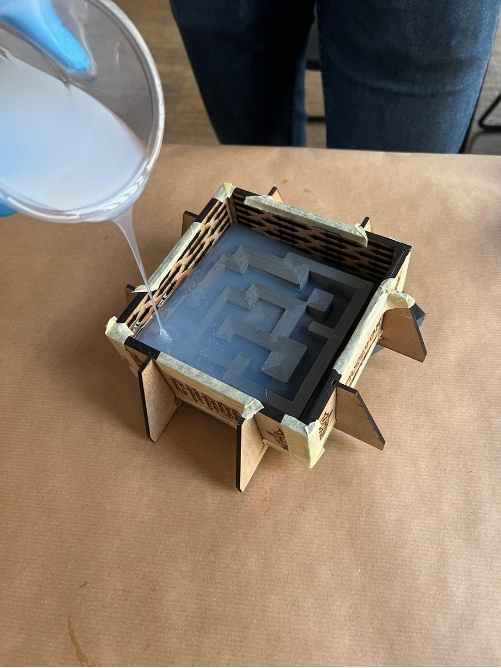
Silicone mold curing
Silicone capturing 3D print details

For the mold, we worked with silicone and learned about locks, wall thickness, and proper sealing. Despite preparing everything carefully, the laser-cut box still leaked due to its imperfect tolerances.

Adaptive Making: After sealing it with tape, the mold cured well and captured the details of the 3D print accurately.

This step showed how even basic containment structures need precision, and how adaptable you must be when something unexpected happens.

Silicone Mold Release
🌱

Biomaterials

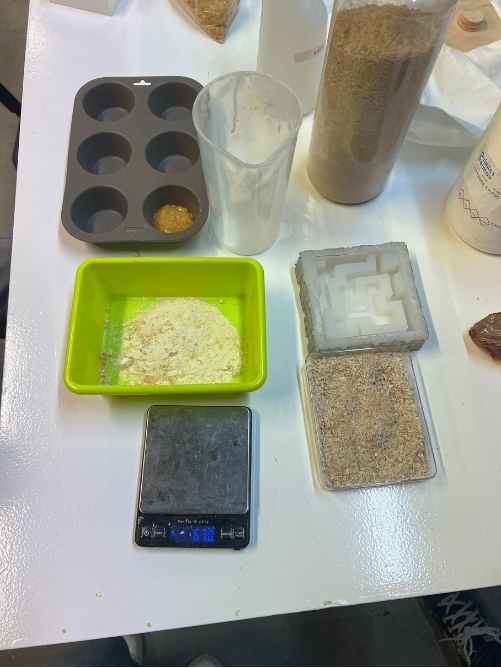
Resin casting samples
Two resin batches with different properties

In this session we experimented with resin as the main casting material. We followed the recipe for the first batch, but it turned out to be insufficient, so we mixed a second batch without strictly following the proportions.

Surprising Result: The "improvised" mixture cured much better: stronger, stiffer, and closer to what we intended. The part made with the correct recipe was soft and fragile.

This contrast made the session particularly interesting, showing how small deviations in biomaterial formulas can dramatically change their behavior.

Bio-resin Casting Material Testing Recipe Variation
🎨

TouchDesigner

The final session focused on creating a visual composition in TouchDesigner. It was less about fabrication and more about exploring digital expression and real-time visuals.

Digital Expression: Even though it was brief, it connected the making process with a more experiential and interactive layer.

It showed how design also expands beyond physical materials, opening possibilities for sensory and temporal dimensions in our work.

TouchDesigner Real-time Visual Programming

Final Reflection

Across these sessions, the goal was to understand the workflow, the potential errors, and the wide range of tools available in the workshop. Even with previous experience in all these techniques, revisiting them through different machines and setups was valuable.

Anticipation

Each stage revealed how critical it is to anticipate mistakes before they happen.

Adaptation

Learning to adapt when things go wrong is essential in digital fabrication.

Exploration

Prototyping is both technical and exploratory—an essential part of designing with intention.

This hands-on overview reinforced how prototyping bridges precision and experimentation, reminding us that making is not just about following instructions, but about developing an intuition for materials, machines, and their unpredictable interactions.


Last update: April 9, 2026